<!-- Google tag (gtag.js) --> <script async src="https://www.googletagmanager.com/gtag/js?id=G-FNVKYB7G4T"></script> <script> window.dataLayer = window.dataLayer || []; function gtag(){dataLayer.push(arguments);} gtag('js', new Date()); gtag('config', 'G-FNVKYB7G4T'); </script>


An unexpected medical bill, sudden job loss, or urgent car repair can disrupt even a carefully managed budget. In the UAE, where residents often balance rent, family expenses, insurance, and other financial commitments, having accessible savings can make these situations easier to manage. Emergency fund planning UAE is the process of setting aside money specifically for unexpected expenses so you can handle financial challenges without relying heavily on credit cards, personal loans, or long-term investments. With a realistic savings target, regular contributions, and a suitable place to keep your money, you can build a financial safety net that supports greater confidence and stability.
Table of Contents
What Is Emergency Fund Planning UAE?
Emergency fund planning means calculating how much money you may need during a financial emergency and gradually saving that amount in an accessible account.
Unlike savings for holidays, property purchases, or retirement, an emergency fund is reserved for essential, unexpected expenses. Its primary purpose is financial protection rather than investment growth.
For UAE residents, emergency savings can help cover:
- Essential living expenses during unemployment.
- Unexpected medical costs not covered by insurance.
- Emergency travel to visit family abroad.
- Urgent vehicle repairs or essential home maintenance.
- Temporary income interruptions for freelancers and business owners.
Quick definition: An emergency fund is a dedicated reserve of money used to cover essential, unforeseen expenses without significantly disrupting your regular finances.
Why Is an Emergency Fund Important in the UAE?
Life in the UAE can involve substantial recurring commitments, including housing, school fees, transport, utilities, and family support. Even people with stable salaries may face unexpected expenses that exceed their monthly budget.
An emergency fund provides a financial buffer when income decreases or expenses suddenly increase. It can also reduce the pressure to sell investments at an inconvenient time or borrow money to cover essential bills.
1. Protection Against Income Loss
If you lose your job or experience a delayed salary, your regular expenses may continue. Emergency savings can help cover essential bills while you search for new employment or arrange another source of income.
2. Greater Financial Independence
Without emergency savings, an unexpected expense may lead to borrowing. A financial reserve can reduce dependence on loans and credit cards, helping you avoid unnecessary interest costs.
3. Support for Families and Expats
Residents supporting children, parents, or relatives overseas may face additional financial responsibilities. An emergency reserve provides flexibility when family needs arise unexpectedly.
4. Better Long-Term Financial Decisions
A financial emergency can force you to withdraw money from investments before you planned to. A separate reserve can help protect your long-term financial strategy.
How Much Emergency Fund Should You Save in the UAE?
The right amount depends on your essential monthly expenses, job stability, family responsibilities, and access to other reliable financial resources.
A common starting point is to save three to six months of essential living expenses. People with irregular income, dependants, or limited employment security may benefit from targeting a larger reserve.
Emergency Fund Calculation Example
Suppose your essential monthly expenses are AED 8,000.
| Savings Period | Monthly Expenses | Emergency Fund Target |
|---|---|---|
| 1 month | AED 8,000 | AED 8,000 |
| 3 months | AED 8,000 | AED 24,000 |
| 6 months | AED 8,000 | AED 48,000 |
| 9 months | AED 8,000 | AED 72,000 |
These figures are illustrative. Your actual target should reflect your personal circumstances and essential spending.
Include rent, groceries, utilities, transport, minimum debt payments, necessary insurance premiums, and other unavoidable costs. Exclude discretionary shopping, entertainment, and optional holidays when calculating your minimum emergency budget.
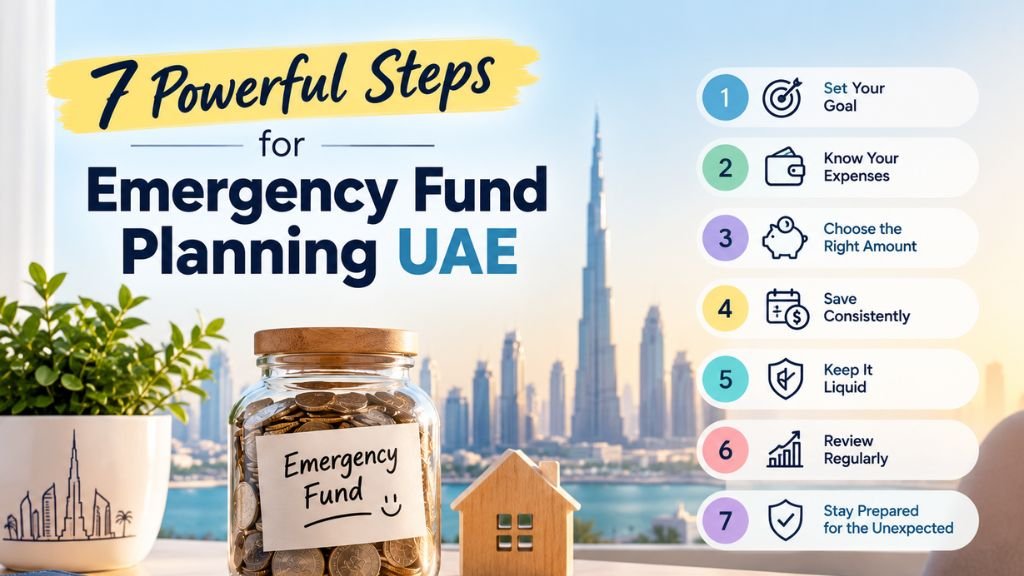
7 Powerful Steps for Emergency Fund Planning UAE
Building an emergency fund does not require saving a large amount immediately. A consistent approach can help you make progress while managing everyday responsibilities.
Step 1: Calculate Your Essential Monthly Expenses
Review your bank statements and identify the expenses you would still need to pay if your income stopped temporarily.
Separate essential costs from optional spending. For example, rent, groceries, electricity, transport, and necessary medical expenses should take priority over dining out or entertainment.
Once you know your essential monthly spending, multiply it by three to six to establish an initial target.
Step 2: Set a Realistic Savings Goal
Avoid choosing a target that places unnecessary pressure on your current budget. Start with a manageable milestone, such as AED 3,000 or one month’s essential expenses.
After reaching your first goal, continue building towards three months of expenses and eventually six months if your circumstances require it.
Small, achievable targets can make saving easier to maintain.
Step 3: Automate Your Monthly Contributions
Set up an automatic transfer to your emergency savings account after receiving your salary. This approach helps you save consistently before spending on non-essential items.
For example, if you save AED 1,000 each month, you could accumulate AED 12,000 in one year, excluding any interest.
Choose an amount you can maintain without missing essential payments or taking on new debt.
Step 4: Choose an Accessible Savings Account
Your emergency fund should be easy to access when an urgent expense arises. Consider an account with suitable withdrawal access, clear fees, and appropriate protection under the applicable banking arrangements.
Compare account conditions carefully. Some products may impose withdrawal restrictions, minimum balances, or penalties that make them unsuitable for emergency savings.
Step 5: Reduce Unnecessary Expenses
Review your recurring subscriptions, dining expenses, shopping habits, and other flexible costs. Redirect a reasonable portion of the money saved towards your emergency reserve.
You do not need to eliminate every enjoyable activity. The objective is to create a sustainable balance between present needs and future financial security.
Step 6: Keep Emergency Savings Separate
Maintain a separate account or clearly designated savings balance for emergencies. Mixing this money with everyday spending can make it harder to track your progress.
Use the fund only for genuine, unplanned needs. A holiday, a new phone, or a planned purchase should generally come from a separate savings goal.
Step 7: Review and Replenish Your Fund
Your financial needs may change when you move home, have a child, change jobs, or take on new responsibilities.
Review your target at least once or twice a year. If you use the fund, make replenishing it a priority once your immediate financial situation stabilises.
Emergency Fund Planning UAE for Different Types of Residents
Not everyone needs the same savings strategy. Your employment arrangement, household responsibilities, and income predictability should guide your plan.
Salaried Employees
Employees with predictable monthly salaries may start with three months of essential expenses. Those in uncertain industries or with substantial family commitments may prefer six months or more.
Freelancers and Self-Employed Professionals
Freelancers may experience irregular payments and periods without projects. A reserve covering six to nine months of essential expenses may provide additional flexibility, depending on income volatility.
Families with Children
Families should account for essential school-related costs, childcare, healthcare, housing, and other unavoidable commitments. Their target may need to be higher than that of a single person with fewer responsibilities.
New UAE Residents
People who have recently moved to the UAE may face initial housing costs, relocation expenses, and uncertainty about their new employment arrangements. Building emergency savings alongside regular budgeting can help them prepare for unexpected changes.
Where Should You Keep Your Emergency Fund?
The best place for emergency savings prioritises access and reliability over high returns.
Consider the following options:
- Accessible savings account: May provide convenient access and some interest, depending on the account terms.
- Suitable current account balance: Offers immediate access but may provide little or no interest.
- Notice or fixed-term deposit: May offer different returns, but access restrictions or early-withdrawal conditions can make it less suitable for the entire emergency fund.
Avoid keeping your entire emergency reserve in volatile investments, speculative assets, or products that cannot be accessed quickly. You may choose to hold part of your savings in a suitable interest-bearing account, provided the withdrawal terms fit your needs.
Before opening an account, review the applicable fees, access conditions, and deposit-protection arrangements rather than assuming every account offers the same safeguards.
Benefits of Emergency Fund Planning UAE for Long-Term Financial Security
Emergency fund planning UAE helps individuals and families prepare for financial uncertainty while maintaining control over their everyday expenses. By building an emergency reserve, you can manage unexpected bills, temporary unemployment, and urgent family needs without disturbing your long-term investments. A structured savings approach also supports better budgeting and reduces the risk of depending on high-interest borrowing. When combined with Financial Planning in Dubai, emergency savings can help you balance short-term financial protection with future goals such as retirement, education, and wealth creation.
How to Start Emergency Fund Planning UAE on a Monthly Salary
Starting emergency fund planning UAE does not require a high income or a large initial deposit. Begin by calculating your essential monthly expenses and choosing a savings amount that fits your budget. For example, saving AED 500 each month can build AED 6,000 in one year, provided you make no withdrawals and excluding interest. You can increase your contribution whenever your income grows or expenses decrease. Reviewing suitable savings accounts and comparing relevant services from Finance Companies in Dubai can also help you understand your options. The key is to save consistently and use your emergency fund only for genuine, unexpected expenses.
Emergency Fund Planning UAE for Expats and Working Professionals
For expatriates and working professionals, emergency fund planning UAE is particularly valuable because employment changes, relocation costs, and family commitments can affect financial stability. Consider building a reserve that covers three to six months of essential living expenses, or more if your income is irregular. Keep the money accessible and separate from your regular spending account so it is available when needed. Reviewing your emergency savings alongside Financial Planning in Dubai can help you adapt your financial strategy as your responsibilities change and maintain greater confidence during unexpected situations.
Frequently Asked Questions
1. How much emergency fund should I have in the UAE?
A common guideline is three to six months of essential expenses. If you are self-employed, have dependants, or face uncertain income, consider a larger reserve based on your circumstances.
2. Can I build an emergency fund on a salary of AED 5,000?
Yes. Start by reviewing essential expenses and saving an affordable amount regularly. Even AED 200–500 per month can build a useful reserve over time, although your progress will depend on your budget.
3. Should I invest my emergency fund in mutual funds?
Generally, your core emergency fund should remain in accessible, relatively stable savings rather than market-linked investments. Mutual funds can fluctuate in value and may not be suitable for money you need immediately.
4. Is an emergency fund necessary if I have insurance?
Yes. Insurance may cover specific eligible events, subject to policy conditions, exclusions, deductibles, and limits. An emergency fund can help cover other essential expenses, temporary income loss, and costs that insurance does not reimburse.
5. How often should I review my emergency fund?
Review it at least once or twice a year and whenever your income, household size, housing costs, or financial responsibilities change. Recalculate your target and replenish any money used.
Related Insights: Topics to Explore
For a more complete financial strategy, explore these related topics:
- Financial Planning in Dubai
- Personal Budgeting in the UAE
- Monthly Saving Plan in UAE
- Wealth Management in Dubai
- Retirement Planning in UAE
- Finance Companies in Dubai
Testimonials and Client Experiences
The following are illustrative testimonial-style examples, not verified client reviews. Replace them with genuine, approved customer feedback before publishing.
“Creating a monthly savings target helped me organise my expenses and work towards a more secure financial future.”
“Separating emergency savings from everyday spending made it easier to track my progress and avoid unnecessary withdrawals.”
“Reviewing my budget regularly helped me prepare for unexpected costs without disrupting my other financial goals.”
Conclusion
A well-structured emergency savings plan can help UAE residents manage unexpected expenses, reduce dependence on borrowing, and protect their long-term financial goals. Start by calculating your essential monthly costs, setting a realistic target, automating contributions, and choosing an accessible place to keep your savings.
With consistent habits and regular reviews, emergency fund planning UAE can become an achievable part of your overall financial strategy.
Ready to take control of your finances? Contact Bricks Consultancy to explore professional financial planning guidance and develop a savings strategy that aligns with your goals, budget, and circumstances.