<!-- Google tag (gtag.js) --> <script async src="https://www.googletagmanager.com/gtag/js?id=G-FNVKYB7G4T"></script> <script> window.dataLayer = window.dataLayer || []; function gtag(){dataLayer.push(arguments);} gtag('js', new Date()); gtag('config', 'G-FNVKYB7G4T'); </script>



Moving to Dubai can be exciting, but managing money in a new country requires careful planning. Between rent, transportation, groceries, insurance, lifestyle expenses, and future goals, your finances can change quickly. Learning How to Manage Money After Moving to Dubai can help you build financial stability without giving up the lifestyle you enjoy. Whether you are a first-time expat or an experienced professional relocating to the UAE, a clear money strategy can make your transition easier and more organized.
Table of Contents
What Does It Mean to Manage Money After Moving to Dubai?
How to Manage Money After Moving to Dubai means creating a practical system for managing your income, expenses, savings, investments, insurance, and long-term financial goals after relocation.
Your first priority should be understanding your new cost structure. Dubai offers many lifestyle choices, so your monthly spending can vary significantly depending on where you live, how you travel, your family size, and your personal priorities.
Instead of simply tracking what you spend, create a plan for where your money should go.
1. Create a Realistic Dubai Monthly Budget
A budget is the foundation of effective money management. Start by calculating your monthly income after regular deductions and then list your essential expenses.
Typical categories include:
- Rent and housing expenses
- Groceries and household costs
- Transportation and fuel
- Utilities and communication
- Health and other insurance
- School or childcare expenses
- Debt or loan repayments
- Entertainment and dining
- Savings and investments
A useful approach is to separate essential expenses, lifestyle expenses, and financial goals. This makes it easier to identify areas where you can adjust spending.
For example, someone earning AED 20,000 per month may have very different financial priorities from someone earning AED 10,000. The important point is not to copy another person’s budget but to build one based on your income and responsibilities.
2. Understand Your Housing Costs Before Upgrading Your Lifestyle
Housing is often one of the largest expenses for people living in Dubai. Before selecting a property, consider the complete cost rather than looking only at monthly rent.
Think about:
- Rent
- Security deposits
- Agency fees where applicable
- Utilities
- Internet and phone services
- Furniture
- Maintenance-related expenses
- Transportation from your location
A lower rent may not always result in lower overall spending if your daily commute becomes expensive or time-consuming.
When How to Manage Money After Moving to Dubai is your priority, housing should be evaluated as part of your complete financial picture.
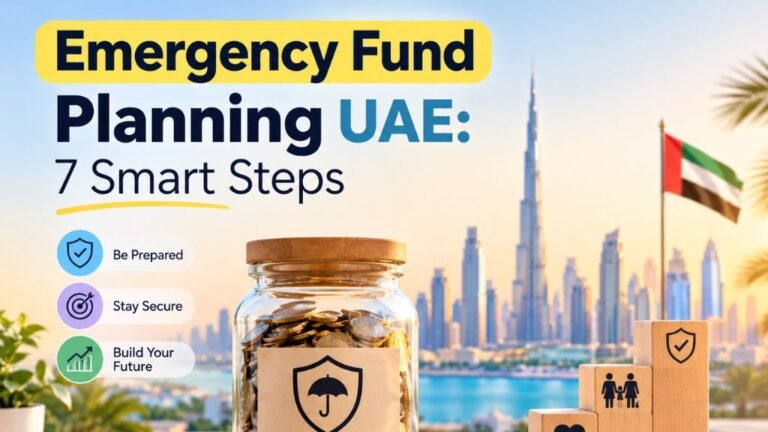
3. Build an Emergency Fund
An emergency fund provides financial protection when unexpected expenses occur.
For example, a job change, urgent travel, unexpected medical cost, or major household expense can affect your budget suddenly. Having accessible savings can prevent you from depending on credit cards or loans during such situations.
A practical goal is to gradually build several months of essential living expenses.
Start small if necessary. Even setting aside a fixed amount every month can create meaningful financial protection over time.
How Much Should You Save?
There is no single amount that works for everyone. Your target should depend on your employment situation, family responsibilities, monthly expenses, debt, and income stability.
For example:
| Financial Priority | Suggested Approach |
|---|---|
| Monthly expenses | Track consistently |
| Emergency savings | Build gradually |
| Short-term goals | Keep money accessible |
| Long-term goals | Consider suitable investments |
| Insurance | Review protection regularly |
| Retirement | Start early and contribute consistently |
The key is consistency rather than trying to build the entire emergency fund immediately.
4. Separate Needs From Lifestyle Spending
Dubai offers restaurants, shopping destinations, entertainment, travel, and premium services at many price points. Having access to these options can make lifestyle spending increase without you noticing.
One useful technique is to create separate spending limits for essential and discretionary expenses.
Before making a large purchase, ask:
Does this expense support a real need, an important goal, or simply a short-term desire?
This does not mean avoiding enjoyable experiences. Instead, it helps you spend intentionally.
A balanced financial plan should allow room for entertainment while protecting your savings and future goals.
5. Open and Organize Your Financial Accounts
After moving to Dubai, organize your banking and financial accounts so that everyday spending and long-term savings are easy to monitor.
Consider maintaining separate allocations for:
- Daily expenses – rent, groceries, transportation, and bills.
- Emergency savings – money reserved for unexpected situations.
- Short-term goals – travel, education, major purchases, or relocation costs.
- Long-term investments – money intended for future wealth creation.
- Protection – insurance and other financial safeguards.
Keeping these purposes clear can make financial decisions easier.
You should also review bank fees, transfer costs, account requirements, and payment arrangements before committing to a particular banking setup.
6. Start Financial Planning Early
Relocation is often the perfect time to review your entire financial strategy.
Financial Planning in Dubai can help you connect your income with specific goals such as buying a home, children’s education, retirement, wealth creation, or preparing for a future move.
A financial plan should consider your current financial position as well as your expected future needs.
For example, a young professional may prioritize emergency savings and investments, while a family may focus more heavily on education planning, insurance, and long-term wealth management.
Professional Financial Planning in Dubai can also help you review different financial priorities instead of making isolated decisions about savings or investments.
Set Short-, Medium-, and Long-Term Goals
Break your financial goals into time periods.
Short-term goals:
Emergency savings, relocation expenses, travel, and major purchases.
Medium-term goals:
Education, property planning, business development, or building a larger investment portfolio.
Long-term goals:
Retirement planning, wealth accumulation, and financial independence.
This structure gives every part of your money a purpose.
7. Research Finance Companies in Dubai Before Choosing Financial Products
People relocating to Dubai may encounter many financial products and service providers. Do not select a product simply because it is heavily advertised or recommended casually.
When researching Finance Companies in Dubai, consider the company’s services, transparency, applicable costs, product suitability, and regulatory framework.
Ask questions such as:
- What are the total costs?
- What risks are involved?
- Is the product suitable for my financial objective?
- What happens if my circumstances change?
- Are there penalties or restrictions?
- How often should the strategy be reviewed?
Understanding the product before committing can reduce avoidable financial mistakes.
Invest According to Your Goals and Risk Profile
Once your emergency savings and basic financial structure are established, you can consider long-term investment options.
Investment decisions should reflect your objectives, time horizon, liquidity requirements, and tolerance for market fluctuations.
For example, money required in the near future may need a different approach from money intended for long-term wealth building.
Do not invest simply because an investment has performed well recently. Past performance does not guarantee future results.
This is another area where Financial Planning in Dubai can help you evaluate investments within your broader financial strategy rather than treating them as isolated products.

Protect Your Income With Appropriate Insurance
Financial planning is not only about saving and investing. Protection is equally important.
Insurance can help manage the financial impact of certain unexpected events. Depending on your circumstances, you may need to review health insurance, life insurance, term insurance, property coverage, or other forms of protection.
Your insurance requirements may change after marriage, having children, taking a mortgage, changing employment, or starting a business.
Review your coverage whenever your financial responsibilities change.
Common Money Mistakes to Avoid After Moving to Dubai
Learning How to Manage Money After Moving to Dubai also means understanding what can go wrong.
Some common mistakes include:
- Spending heavily during the first few months
- Choosing housing based only on appearance
- Ignoring emergency savings
- Using credit for lifestyle expenses
- Investing without understanding the risks
- Delaying retirement planning
- Failing to review insurance
- Comparing your lifestyle with higher-income peers
- Making financial decisions based solely on social media advice
Small mistakes can become expensive when repeated every month.
How to Manage Money After Moving to Dubai and Build Savings
Knowing How to Manage Money After Moving to Dubai is important for anyone who wants to build financial stability in the UAE. Start by creating a monthly budget that covers essential expenses, savings, emergency funds, insurance, and investments. When you understand How to Manage Money After Moving to Dubai, you can identify unnecessary expenses and redirect more of your income toward important financial goals. Professional Financial Planning in Dubai can further help you organize savings and investments according to your income, responsibilities, and future plans. Effective Financial Planning in Dubai is especially useful when you want to balance your current Dubai lifestyle with long-term financial security.
How to Manage Money After Moving to Dubai With Professional Guidance
For many new residents, How to Manage Money After Moving to Dubai can involve more than simply preparing a monthly budget. Understanding investment options, insurance, savings strategies, and long-term wealth planning can make financial decisions more complex. Finance Companies in Dubai may provide different financial products and services, so it is important to understand costs, risks, terms, and suitability before making a decision. When researching Finance Companies in Dubai, consider how their services fit into your overall Financial Planning in Dubai strategy. Learning How to Manage Money After Moving to Dubai and combining it with structured Financial Planning in Dubai can help you manage your income more effectively while working toward long-term financial goals.
How to Manage Money After Moving to Dubai With Smart Financial Planning
Learning How to Manage Money After Moving to Dubai starts with creating a practical financial plan based on your income, expenses, savings, and future goals. After relocating, track your rent, groceries, transportation, insurance, and lifestyle expenses to understand your actual monthly requirements. Effective Financial Planning in Dubai can help you organize your budget, build an emergency fund, manage savings, and prepare for long-term goals. When you understand How to Manage Money After Moving to Dubai, you can make better decisions about saving, investing, insurance, and wealth management. A structured approach to Financial Planning in Dubai also helps you avoid unnecessary spending while keeping your financial priorities on track.
How to Manage Money After Moving to Dubai With Finance Companies in Dubai
Understanding How to Manage Money After Moving to Dubai also involves researching suitable financial products and professional services. Finance Companies in Dubai offer different financial solutions, but your choice should depend on your financial goals, risk tolerance, investment timeline, and personal circumstances. Before selecting services from Finance Companies in Dubai, compare costs, understand product features, and review potential risks. Combining professional guidance with Financial Planning in Dubai can help you manage savings, investments, insurance, and long-term wealth goals more systematically. For anyone learning How to Manage Money After Moving to Dubai, working with suitable Finance Companies in Dubai can provide a structured way to review and manage important financial decisions.
What Makes Money Management Sustainable?
Good money management should be simple enough to maintain.
Set aside time once a month to review:
Income → Expenses → Savings → Investments → Insurance → Goals
If your income increases, avoid automatically increasing every lifestyle expense. Directing part of additional income toward savings or investments can improve long-term financial resilience.
Similarly, review your financial plan after major life changes.
Testimonials
“Creating a structured monthly budget helped me understand where my money was actually going after relocating to Dubai.”
“Separating emergency savings from everyday spending made managing unexpected expenses much easier.”
“Reviewing my long-term goals helped me make financial decisions with more confidence instead of focusing only on monthly expenses.”
These testimonials are illustrative examples of common client experiences and are not presented as independently verified customer reviews.
People Also Ask About Managing Money in Dubai
How much money should I save after moving to Dubai?
Start by building an emergency fund based on your essential monthly expenses. The appropriate target depends on your income stability, family responsibilities, debt, and lifestyle.
What should I do financially after moving to Dubai?
Begin by creating a budget, understanding housing and living costs, establishing emergency savings, reviewing insurance, and setting short- and long-term financial goals.
Is financial planning important for expats in Dubai?
Yes. Financial planning can help expats coordinate savings, investments, insurance, retirement goals, and other financial priorities according to their circumstances.
How can I reduce unnecessary spending in Dubai?
Track your spending for several months, identify recurring discretionary expenses, set monthly limits, and prioritize purchases that support your financial goals.
When should I start investing after moving to Dubai?
First establish a stable financial foundation, including manageable expenses and emergency savings. Then evaluate investment options based on your goals, time horizon, liquidity needs, and risk tolerance.
Related Insights
If you are researching How to Manage Money After Moving to Dubai, these related topics can also help:
- Financial Planning in Dubai
- Finance Companies in Dubai
- Investment in UAE
- Monthly Investment Plan in UAE
- Wealth Management in Dubai
- Retirement Planning in UAE
Conclusion
Moving to Dubai can open new professional and financial opportunities, but good money management requires planning from the beginning. Create a realistic budget, control lifestyle inflation, build emergency savings, protect your income, and invest according to clearly defined goals.
Understanding How to Manage Money After Moving to Dubai can help you make more informed financial decisions and create a stronger foundation for your future in the UAE.
If you want personalized guidance, Bricks Consultancy can help you review your financial goals and explore suitable approaches for savings, investments, insurance, and long-term financial planning in Dubai. Start your financial planning journey with a structured strategy designed around your individual needs.